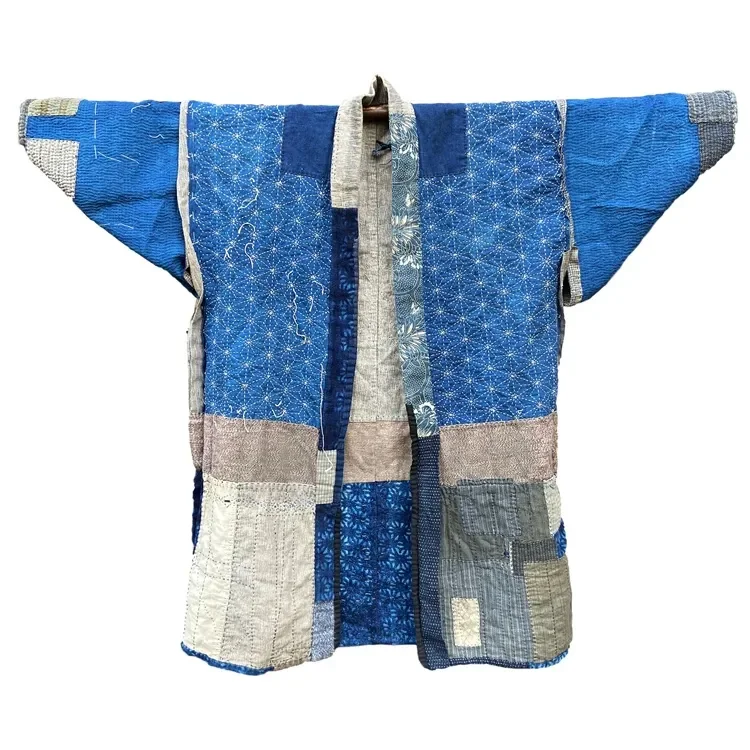
Atsushi Futatsuya
Five-Day Sashiko Stitching Retreat
SOLD OUT - WAITLIST ONLY
September 13, 2026, 5:30 pm: Meet & Greet
September 14 - 18, 2026
$1295 + $175 Supply Package
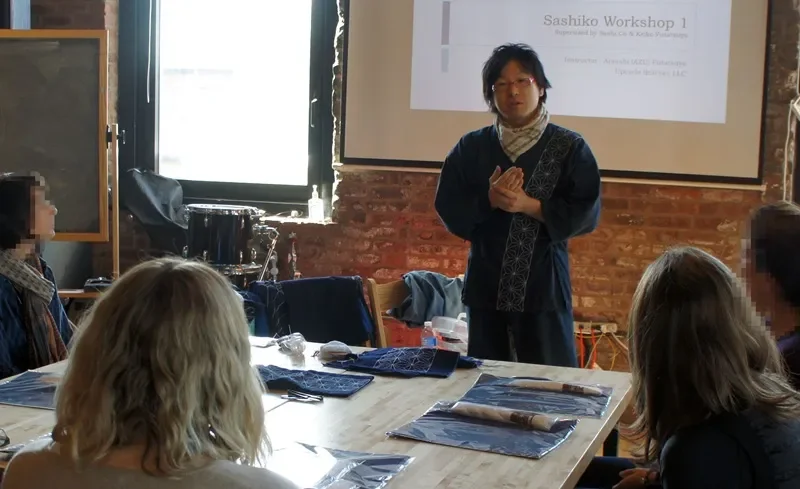
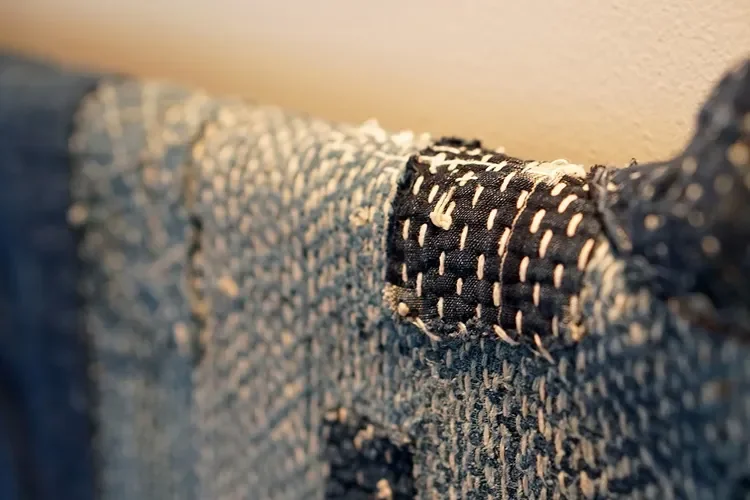
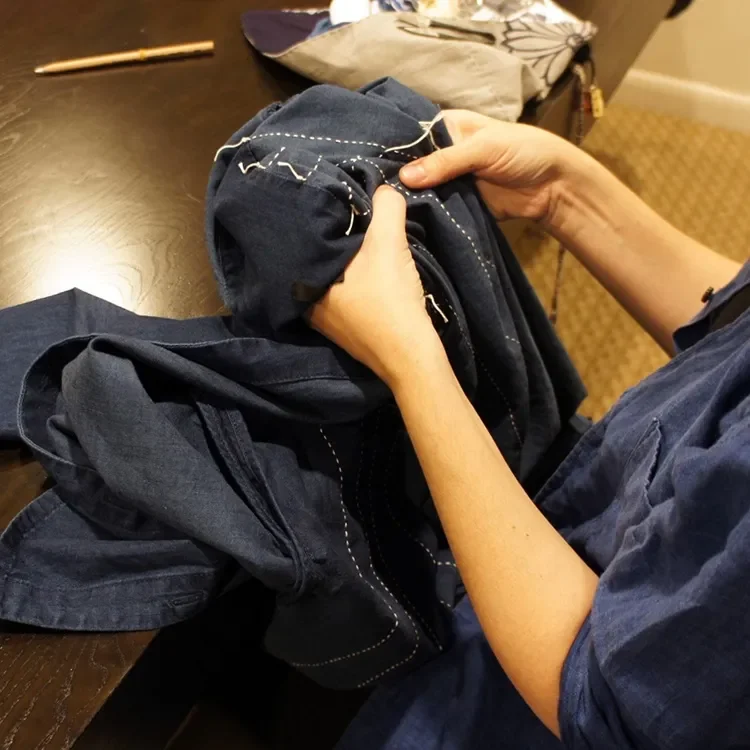
This five-day Sashiko stitching retreat will teach you the ideas, patterns, and core and essence of Japanese Sashiko stitching through hands-on practice. During this week, you’ll learn beautiful stitching techniques and discover the history of Sashiko, which emphasizes care, connection, and self-expression through traditional craftsmanship.
Through each daily lesson, you will learn the basics of the craft. You’ll begin with the Unshin stitch, hand posture, and traditional tools, and then learn how patterns, mending, and design come from these foundations. You will learn about balance, rhythm, and intention through your stitches, as each lesson builds on the last to increase your confidence.
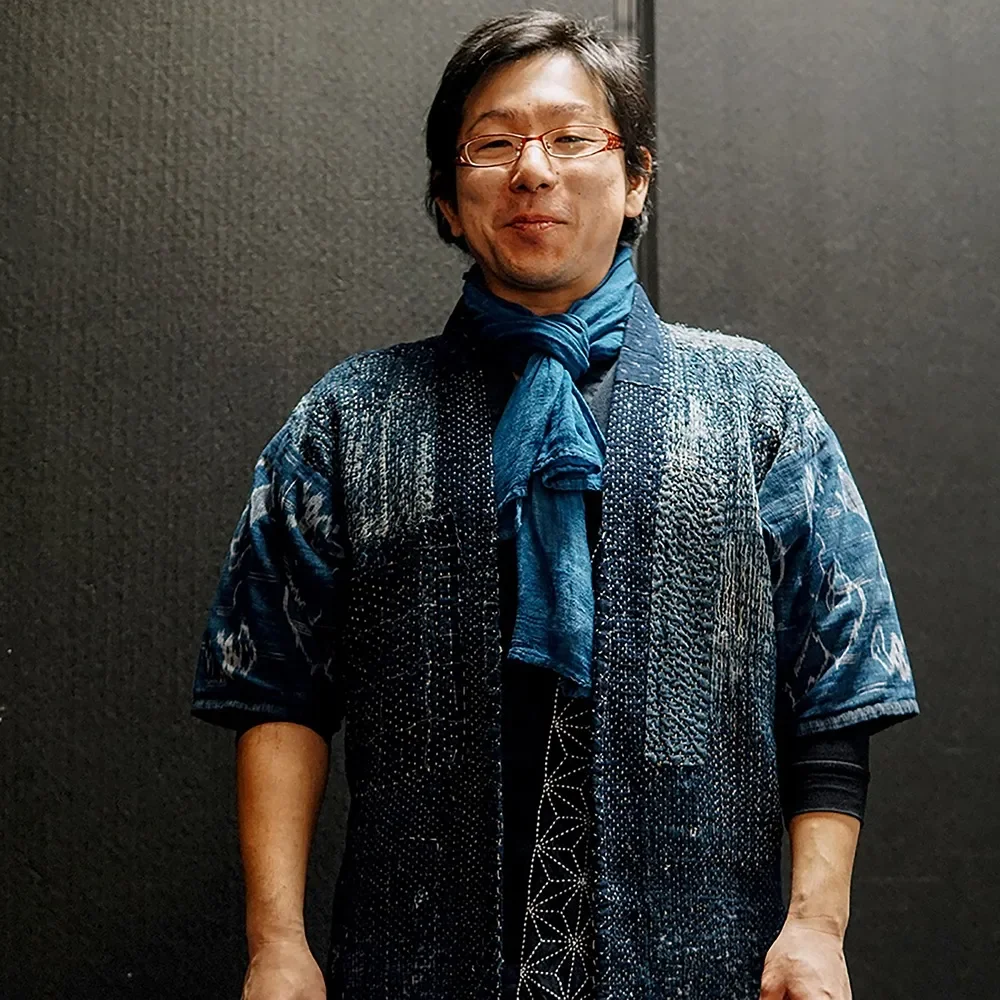
You will learn to stitch the traditional Asanoha (hemp leaf) pattern on indigo fabric — a foundational exercise that you may later finish as a tote bag or decorative panel. Then, you will create a small Sashiko patch, a personal piece that you can use for future visible mending or as a keepsake of your practice. Best of all, after this retreat, you will be able to use Sashiko stitching on your clothing to improve its texture, durability, and charm. Your stitched clothing becomes more than just practical; it shows your skill, creativity, and history.
This retreat is SOLD OUT. You may register for the waitlist by clicking below.
Learning Objectives/ Techniques Covered
The Foundation
Learn the foundation of Sashiko Stitching and the philosophy of Unshin — the rhythmic running stitch at the heart of Sashiko.
Posture & Tools
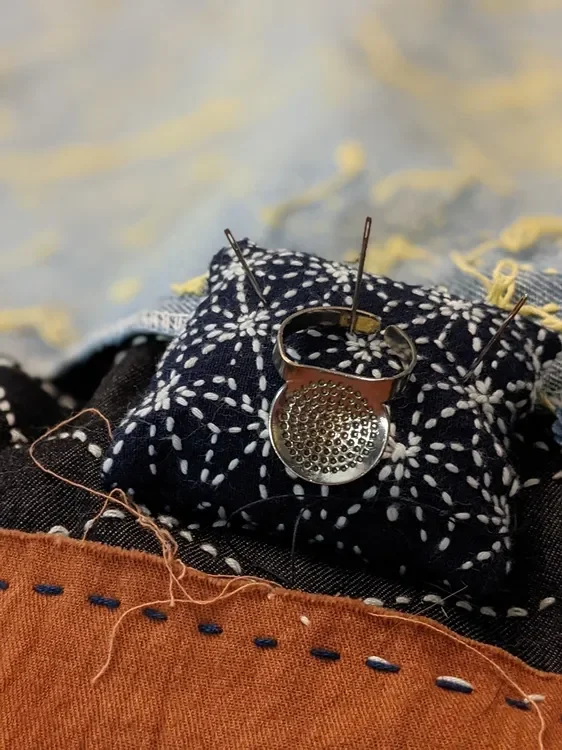
Understand proper posture, hand positioning, and the correct use of Sashiko tools such as the thimble and long needle.
Develop Consistency
Develop consistency and flow through the Asanoha pattern project.
Fabric Preparation
Practice fabric preparation, transferring and drawing the patterns on the fabric
Boro & Sustainability
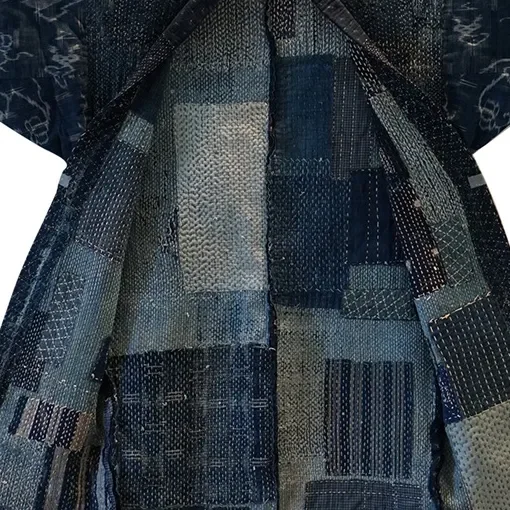
Explore visible mending and the cultural background of Boro and its relationship to sustainability.
Traditional Sashiko Methods
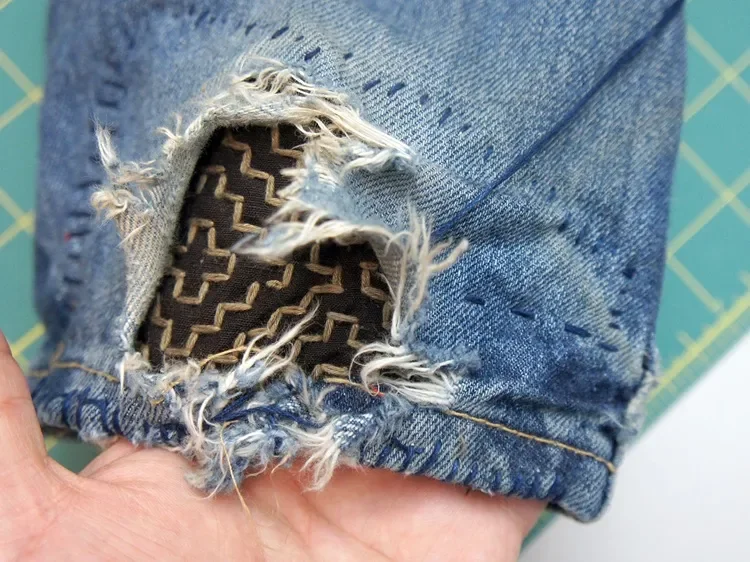
Create personal mending samples using traditional Sashiko methods.
Hitomezashi
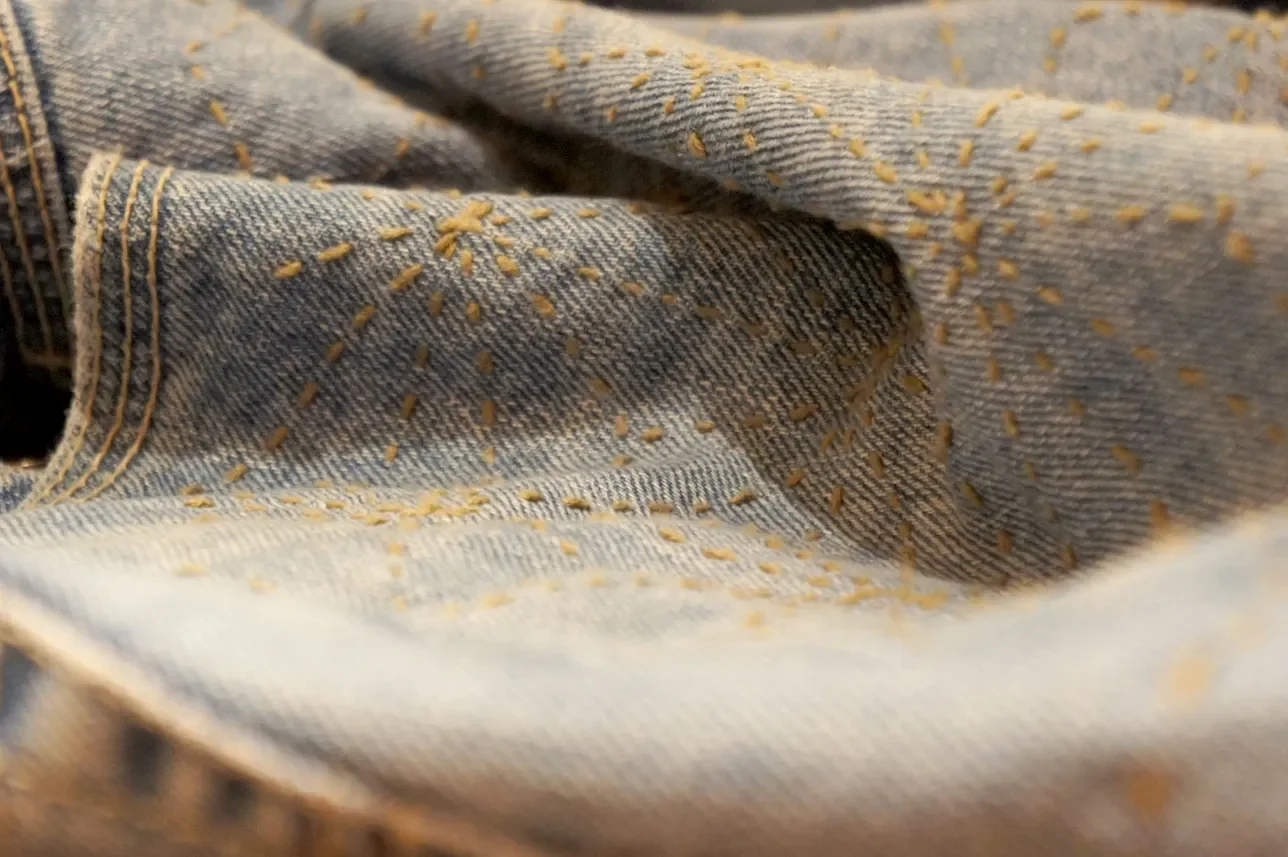
Learn Hitomezashi, a structured style of Sashiko that uses a grid. Discover how rhythm and repetition create intricate beauty.
Learn how to apply the Hitomezashi to future projects to create your own individual expression.
Skill Level
Beginners and experienced sewers are welcome to participate. Whatever your skill level, you will gain clarity about the Sashiko method and confidence in your ability to use it.
What's Included In Retreat
Meet and greet with hors d'oeuvres on Sunday, September 13th at 5:30 pm
Five days of instruction--Monday through Friday
Light breakfast items available daily
Five lunches
Retreat Schedule
The daily schedule is subject to change based on many retreat factors.
-
Sunday, September 13th, 5:30 pm
Meet and greet with instructor and fellow participants. Hors d'oeuvres will be served.
-
In this first part, participants will learn the basic techniques and mindset of Sashiko. This is the foundation for all subsequent instruction. The basics include:
Unshin, rhythmical, running stitching
Correct posture for Sashiko stitching
Appropriate use of the thimble and needle
How to make even stitches
Learning and stitching the traditional Asanoha pattern
-
In the second part, we apply the techniques learned in part one to a project. Participants will learn:
How to prepare the fabric (transferring and drawing the patterns on the fabric)
How to mend a garment with Sashiko techniques
What Boro stitching is and how to make Boro stitches
-
In the first two parts, students focused on finding their own rhythm in stitching. In part three, we cover Hitomezashi, a style of Sashiko that involves using a grid as a guide. Hitomezashi builds upon the same form, ideas, and techniques previously introduced. In part three, you will learn:
The Hitomezashi grid
The Hitomezashi technique and rhythm
How to proceed with Hitomezashi
How to apply Hitomezashi to your future projects
-
Expect part one to be rigorous and methodical. It is intentionally structured so that you can learn the basics that support the more advanced techniques to come.
Parts two and three will be less structured, but reliant on the mindset and techniques learned in part one.
About Atsushi Futatsuya
Atsushi Futatsuya was born in Gifu Prefecture, Japan, as the third generation of a family that has kept Sashiko — a traditional form of Japanese hand stitching — alive through generations. Surrounded by threads, needles, and countless fabrics, he grew up immersed in this practice, learning its rhythms and philosophies as a natural part of daily life.
Together with his mother, Keiko Futatsuya, a master Sashiko artisan with more than forty years of experience, Atsushi founded “Sashi.Co” as a platform to introduce their authentic works and to continue the family’s creative legacy.
In 2017, he expanded his mission globally by launching “Upcycle Stitches,” through which he shares the beauty, history, and philosophy of Sashiko with international audiences via workshops, retreats, writings, and lectures. His work emphasizes not only the visual appeal of stitching but also the stories, cultural values, and connections that Sashiko carries — a living practice of care, repair, and identity that continues to inspire people around the world. Visit his website, Sashiko Story at sashikostory.com.
Supply List for Atsushi Futatsuya
Sashiko Five-Day Sewing Retreat
Please bring all of the required tools and supplies listed below.
In addition to the supplies you bring, there is a supply package you must purchase in advance of the retreat from the instructor. You will receive instructions on how to purchase this package when you register. Click below to download the list of supplies that you must bring as well as a list of what is included in the package you will purchase.
Required Tools
Please bring the following tools:
Ruler, preferably longer than eight inches
Fabric Scissors
Something to take notes with--manually or electronically
1 Roll of Masking Tape
Dressmaker Pins
Pincushion / Needle Rest
1 or 2 Crayola Washable Markers (ideally dark colored with fine tip)
Ballpoint pen (A cheap one is fine)
Nail Clipper (See preparation section below)
Regular Sewing set
Sewing needles
Thread
Finger Guards (See preparation section below)
Preparation
It may be a good idea to cut your nails on the hand that you hold your needle with. Sashiko can be performed with long fingernails, but it may hinder your learning process.
When you learn Unshin, the running stitch, you may need to use your nail to control the needle. This can scratch the nail, so you may want to bring some type of finger guard. You can use thick tape, Bandaids, metal or silicon finger protectors.
Required Supplies
Please bring the following supplies:
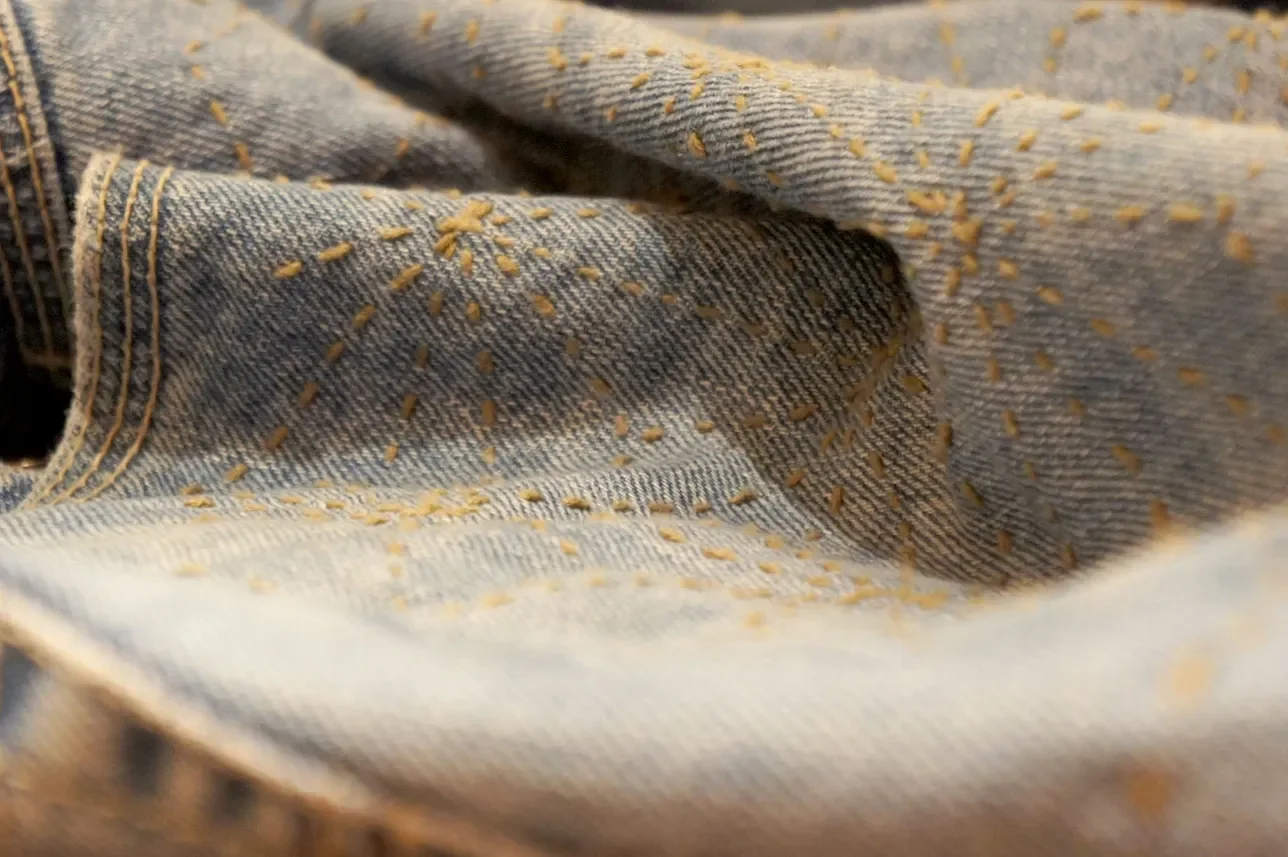
One (or more) cotton garments, such as denim pants or shirt, in need of minor mending. We strongly suggest using well-used denim as new denim may be too difficult to work with for a first time experience. Ideally, the garment should have a hole that is two to three inches in diameter. A larger hole may be too much to complete within the retreat. Your garment doesn’t have to have holes, but the instruction will cover how to apply Sashiko to mending/repairing.
You may also bring any garments you would like to put Sashiko stitches on for part two of the retreat. Bringing several garments/options to choose from would be optimal.
Sashiko works best on cotton fabric. Linen fabric is also feasible. Because Sashiko thread is thick, a fabric that is too heavy or tightly woven will show puckering more easily.
Well worn denim is ideal for this visible mending method. Stretchy material including stretch denim and t-shirt fabrics are not recommended. Heavy fabrics like new or raw denim, canvas, and other non-cotton fabric are also poor choices for Sashiko.
Optional Supplies Not Required
Also any fabrics you would like to use for mending (A piece of fabric for mending will be provided in the package, but you can use your favorite one).
Though not required, feel free to bring any (Sashiko) threads, needles, thimbles, and fabrics you have that you would like advice on how to use.
Also not required, but any books on Sashiko written in English that you would like to share with the group.
Important Information Read Before Registering

Cancellation Policy
If the Estelle Center cancels a retreat, you will receive a full refund.
Your $450 deposit is non-refundable. However, if you cancel your reservation and the Estelle Center is able to fill your space, your deposit of $450 will be refunded less a $100 cancellation fee.
We have limited guest accommodations. If you cancel your room reservation at any time, you will be refunded your payment minus a $150 cancellation fee.

Payments
A deposit of $450 is required to register. The balance of $845 is due by July 15th 2026, 60 days before the start of the retreat.
After July 15, 2026, the full retreat cost of $1,295 is required to register.
In addition to the supplies you are required to bring, you will be responsible to purchase a required supplies package directly from the instructor. It is approximately $175. You will receive information about how to purchase it once you register.

Meals & Lodging
The Sashiko Stitching Five-Day Retreat includes meet and greet with appetizers, Five lunches, and five days of instruction. Other meals and lodging are not included in the registration fee.
Guest rooms at Estelle's Upstairs are available for retreat participants. There are single, double, and triple occupancy rooms that share a large bathroom down the hall. To book a guest room, scroll down to the payment section below.
Click here to learn more about our guest rooms.
Click here to find other accommodations in La Veta.

What To Expect Next
Please add sunshine@estellecreativearts.com to your safe senders list to make sure you receive our emails.
You will receive information about how to purchase the $175 required supplies package after you register.
Service Animal Policy
To preserve a calm and welcoming space for creativity and connection, we ask that guests do not bring pets or emotional support animals.
Service dogs, trained to assist and supported by law, are always welcome. Thank you for helping us hold this space with care. If you have questions or specific needs, we invite you to reach out ahead of your visit.
Click here to learn more about the The Americans with Disabilities Act (ADA) Service Animal Policy.